The Hutt River shaped Upper Hutt's topography, leaving behind deep gravel terraces and pockets of alluvial silt that make every deep excavation a site-specific challenge. Water table sits high across much of the valley floor, and a dig beyond four metres often hits coarse, permeable material that flows if not properly supported. We design excavation systems that account for this variability: temporary retaining, dewatering strategies, and staged cut profiles calibrated to the ground you actually have, not a generic assumption. Ground conditions here change fast between Trentham's silts and the coarser deposits near Timberlea, so our approach relies on targeted site investigation with SPT drilling to feed accurate parameters into the design model before any steel goes in the ground.
Deep excavation in Upper Hutt means designing for gravels that look competent but contain hidden silt lenses and a water table that rarely stays put.
Methodology applied in Upper Hutt
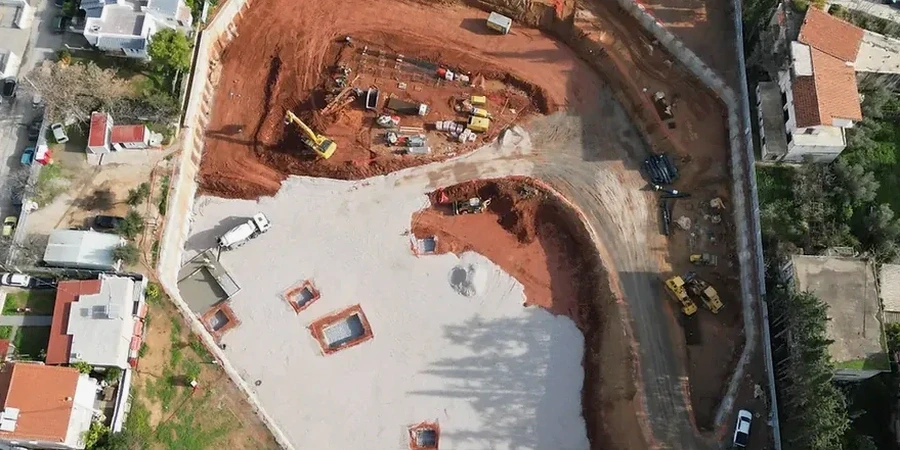
Critical ground factors in Upper Hutt
Upper Hutt sits within a seismically active region only a few kilometres from the Wellington Fault. A deep vertical cut in saturated alluvium presents a real collapse risk if seismic pore pressure build-up is not designed for. NZS 3404 and the NZGS guidelines require explicit consideration of liquefaction-induced lateral spread and loss of passive resistance, particularly below the groundwater table. We have seen projects where a simple soldier pile wall was proposed, only to find the gravel matrix contains enough fines to generate excess pressure under shaking. Our design process integrates results from cyclic triaxial testing and cone penetration data to verify post-earthquake stability. When a client needs to excavate adjacent to an existing structure, the risk of settlement from drawdown or wall deflection becomes the controlling factor. We model these interactions in PLAXIS, calibrating stiffness parameters against lab data from our IANZ-accredited facility, so the shoring system and the neighbouring asset both stay safe through construction and the design life of the development.
Our services
Our deep excavation design work in Upper Hutt covers the full project lifecycle, from feasibility through to construction monitoring. We handle the geotechnical analysis and leave you with a set of drawings and specifications that a contractor can execute safely.
Temporary and Permanent Excavation Support Design
Design of soldier pile, secant, and diaphragm wall systems for cuts up to 15 metres. Includes staged excavation sequencing, anchor design, and shotcrete facing specifications tailored to Upper Hutt ground conditions.
Dewatering and Groundwater Control Plans
Hydrogeological assessment and design of dewatering systems to achieve stable cut faces and dry working platforms. We size wellpoint arrays and deep well installations to match the permeability of the Hutt River terrace deposits.
Frequently asked questions
What does a deep excavation design package cost for an Upper Hutt project?
Fee ranges depend on depth, complexity, and testing requirements. For a typical commercial excavation in Upper Hutt, design fees run from NZ$3.740 to NZ$14.740, covering site investigation specification, laboratory testing, analysis, and construction drawings.
How do you handle seismic design for temporary retaining walls?
We apply NZGS and NZS 3404 guidelines to determine seismic coefficients based on the site subsoil class. For walls retaining more than three metres of saturated material, we assess liquefaction potential and check post-earthquake stability, often specifying reduced passive resistance in the design model.
What ground investigation is needed before you can design an excavation?
We specify a combination of SPT drilling to refusal, CPT soundings where access allows, and machine-dug test pits to inspect shallow strata. Undisturbed samples are taken for triaxial and oedometer testing. Piezometers are installed to establish the groundwater profile over at least one season.
Can you design an excavation right next to an existing building?
Yes, that is a common scenario in Upper Hutt commercial areas. We model building loads as surcharge, calculate wall deflections, and design underpinning or ground improvement if needed. Monitoring with inclinometers and settlement points is specified to validate performance during construction.