Contractors working in Upper Hutt quickly learn that the Hutt River terraces hide more variability than surface inspection ever reveals. A site near Maidstone might show stiff gravels, yet 300 metres east toward Trentham the profile shifts to interbedded silts that completely change bearing response. The cone penetration test strips away that guesswork by driving a calibrated cone tip at a constant 20 mm/s, recording tip resistance, sleeve friction, and dynamic pore pressure in a single continuous push. Our field crews run truck-mounted rigs capable of 20-tonne thrust through dense gravel layers that stop standard penetrometers, and we log data at 10-millimetre intervals so the liquefaction assessment parameters needed for NZGS Module 4 compliance are captured without interpolation gaps. When a structural engineer asks whether that Upper Hutt terrace fill will densify under seismic loading, the CPT profile gives them the answer before the borehole log even arrives.
A single CPT sounding in Upper Hutt alluvium delivers tip resistance, sleeve friction, and pore pressure at 10-mm intervals—resolution no conventional borehole can match.
Methodology applied in Upper Hutt
Critical ground factors in Upper Hutt
The most frequent mistake on Upper Hutt projects is ordering a CPT campaign without first checking the site history for uncontrolled fill. Trentham and Wallaceville have pockets of placed material—sometimes demolition rubble, sometimes dredged river sand—that create refusal at unpredictable depths and wreck cone tips. A saturated peat lens in an old river meander can yield a corrected tip resistance below 0.1 MPa, and if the engineer has designed shallow footings assuming medium-dense sand, the differential settlement risk becomes uninsurable. The second mistake involves pore pressure dissipation tests. When the team skips dissipation pauses at clay-sand interfaces, they miss the consolidation coefficient data that determines whether the foundation will settle for six months or six years. On the western terraces near Mangaroa, where clay-bound gravels alternate with open-framework layers, missing that measurement means the deep excavation dewatering plan is guesswork rather than engineering.
Our services
CPT operations in Upper Hutt are structured around the ground conditions that define the valley floor and eastern terraces. Each service package includes cone calibration certificates, digital data files in GEF or ASCII format, and a geotechnical interpretative report signed by a CPEng-registered engineer.
Seismic CPT with Liquefaction Triggering Analysis
Piezocone soundings to 20 m depth with pore pressure dissipation tests at specified intervals. Analysis follows NZGS Module 4 methodology using Boulanger & Idriss (2014) triggering curves and site-specific magnitude scaling factors for the Wellington Fault. Output includes factor of safety versus depth, liquefaction potential index, and post-liquefaction settlement estimates.
Continuous Profiling for Deep Foundation Design
Multiple CPT soundings on a grid pattern to map the depth to the Hutt River gravels that serve as end-bearing strata. Correlation with soil behaviour type index (Ic) identifies compressible layers requiring piled solutions. Data feeds directly into LCPC and ICP-05 pile capacity methods for driven and bored piles.
Frequently asked questions
What depth can CPT reach in Upper Hutt soils?
In the alluvial silts and sands along the Hutt River corridor, depths of 15 to 20 metres are routinely achieved before encountering the gravel layer. The truck-mounted rigs apply 20 tonnes of thrust, which handles most terrace deposits. Where dense, cemented gravels are encountered—common on the eastern terraces near Silverstream—refusal may occur at shallower depths, and the investigation is supplemented with SPT drilling to extend the profile.
How does CPT compare with SPT for liquefaction assessment?
CPT provides a near-continuous profile of soil resistance at 10-millimetre intervals, whereas SPT delivers readings every 1.5 metres. For liquefaction triggering analysis under NZGS Module 4, the CPT data density allows thin critical layers to be identified that SPT sampling would miss entirely. The cone also measures pore pressure during penetration, giving direct information on drainage behaviour that SPT cannot capture. Most Upper Hutt projects now specify CPT as the primary investigation method, with SPT used for gravel layers where the cone refuses.
What does CPT testing cost in Upper Hutt?
CPT testing in Upper Hutt typically ranges from NZ$290 to NZ$480 per sounding metre, with the final rate depending on depth, number of locations, and whether pore pressure dissipation tests are included. A standard 15-metre CPTu profile with three dissipation pauses at a single location generally falls in the NZ$4,500 to NZ$7,200 range. Mobilisation costs are lower for multiple soundings on the same site visit, and interpretative reporting is priced separately based on analysis complexity.
Can CPT testing be done on sites with limited access?
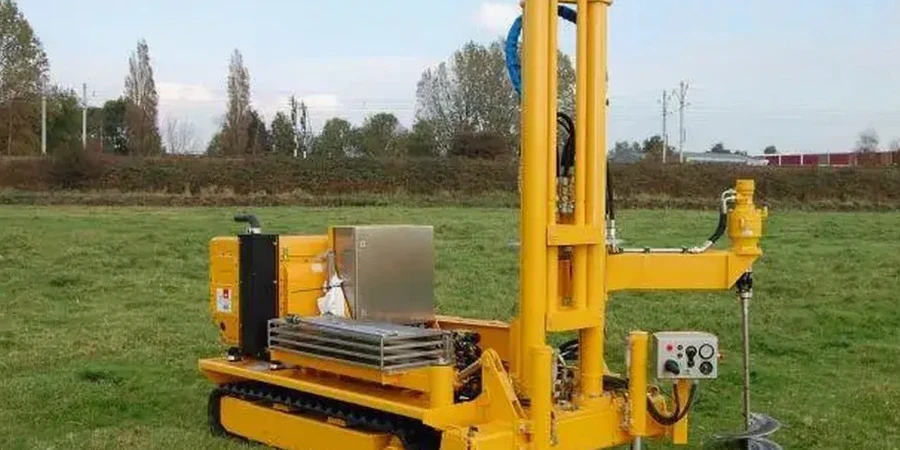
Yes. The tracked CPT rigs used in Upper Hutt have a footprint under 2.5 metres wide and operate on slopes up to 20 degrees. For sites with overhead restrictions—under building eaves or near power lines—we can deploy a portable mini-CPT system that assembles on-site and pushes from a small reaction frame anchored to the ground. The mini-system reaches 8 to 10 metres in typical Upper Hutt silts and provides the same data quality as the full-scale rig.
How long does a CPT sounding take on a typical Upper Hutt site?
A single 15-metre CPTu sounding with three pore pressure dissipation pauses of 5 minutes each takes approximately 90 minutes from setup to extraction. The penetration itself runs at 20 millimetres per second, so the 15-metre push completes in about 12 minutes. The dissipation pauses, where pore pressure decay is monitored, account for most of the on-site time. A three-sounding campaign on one property is typically completed within a single working day.