Upper Hutt’s growth from a timber-milling settlement along the Hutt River into a commuter city of over 45,000 residents has placed increasing demands on land once considered marginal. The broad floodplain terraces that attracted early settlers conceal a complex stratigraphy of alluvial gravels, silts, and pockets of soft organic clay that vary sharply over short distances. A comprehensive soil mechanics study becomes essential when a site sits near the Wellington Fault trace or within the river’s historic meander belt, where bearing strata can drop several metres across a single section. The laboratory and field program integrates triaxial testing to define effective shear strength parameters under drained and undrained conditions, following the framework set by NZGS Module 5 for fine-grained soils. When deep foundations are under consideration, the analysis also draws on data from pile load testing to calibrate shaft friction and end-bearing predictions against the site-specific ground model.
A calibrated soil mechanics study transforms scattered borehole logs into a defensible ground model that holds up under peer review and council consent.
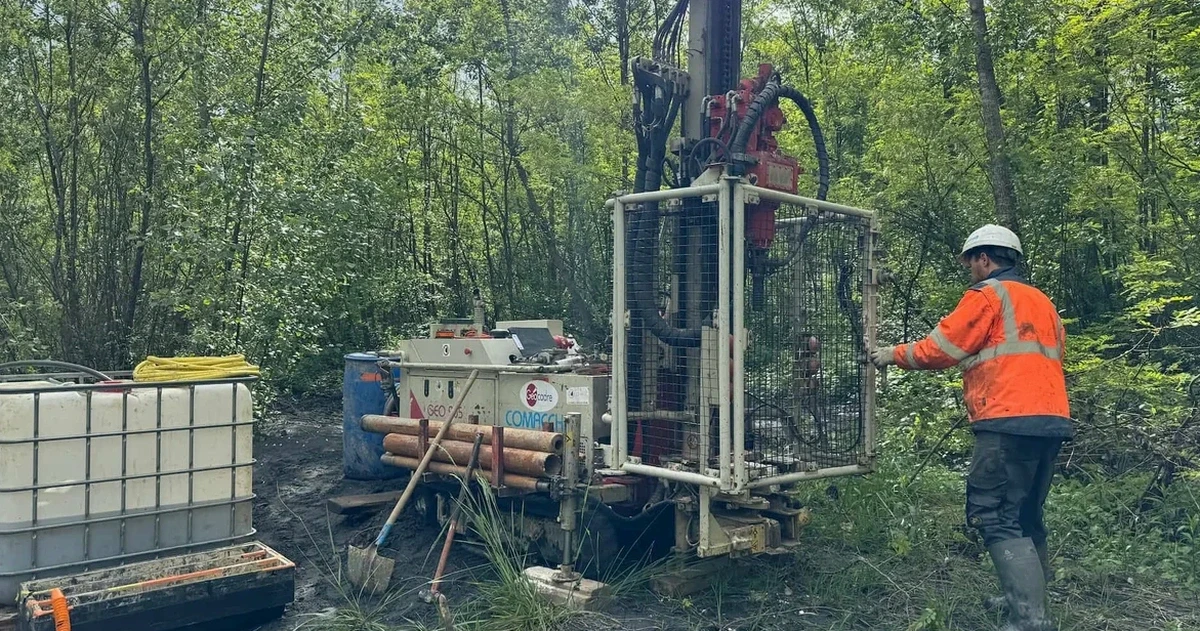
Methodology applied in Upper Hutt
Critical ground factors in Upper Hutt
The 2016 Kaikōura earthquake, though centred well south of the North Island, generated felt intensities of MM V–VI across the Wellington region and reminded engineers that Upper Hutt sits inside one of New Zealand’s most active seismic corridors. A soil mechanics study that omits cyclic laboratory testing on fine-grained layers risks underestimating pore-pressure build-up during a Wellington Fault rupture, a scenario the Wellington Region Emergency Management Office treats as a 1-in-500-year event for planning purposes. Beyond seismicity, the Hutt River’s history of avulsion has left abandoned channels filled with compressible organic silts that can settle differentially under modest footing loads. Identifying these buried channels through a targeted boring layout—and then quantifying settlement with constrained modulus values from oedometer tests—prevents the kind of post-construction distress that leads to costly underpinning and litigation.
Our services
The scope of a soil mechanics study is shaped by the ground conditions encountered and the structural demands of the project. These three work packages cover the majority of Upper Hutt assignments:
Advanced laboratory testing program
Triaxial compression (CIU and CID), direct shear, oedometer consolidation, and Atterberg limits performed in an IANZ-accredited facility. Each test suite is selected to match the stratigraphic units logged in the field, not a generic checklist.
Bearing capacity and settlement assessment
Foundation recommendations for shallow and deep systems using Vesić and Hansen methods, calibrated against site-specific shear strength data and NZGS Module 4 criteria for serviceability and ultimate limit states.
Liquefaction and seismic ground response
Cyclic triaxial or cyclic simple-shear testing on selected silt and sand specimens, paired with 1D site-response analysis to estimate ground-surface accelerations and post-earthquake settlement under design-level shaking.
Frequently asked questions
How much does a soil mechanics study cost for a residential section in Upper Hutt?
For a typical single-dwelling site on the valley floor or lower hillslopes, the combined field investigation and laboratory program usually falls between NZ$5,850 and NZ$9,220. The final figure depends on borehole depth, the number of samples requiring triaxial or consolidation testing, and whether cyclic liquefaction tests are needed.
Which laboratory tests are mandatory for a TC2 foundation in the Hutt Valley?
MBIE guidance for TC2 sites, common across Trentham and Wallaceville, expects Atterberg limits, particle-size distribution, oedometer consolidation on representative fine-grained samples, and undrained shear strength from triaxial or vane tests. The exact suite is agreed during the investigation planning stage with the project geotechnical engineer.
Can you test gravels or only fine-grained soils?
Both. Gravels are tested using large-direct-shear boxes or remoulded triaxial specimens with scalped gradations. The lab follows NZGS guidelines for coarse materials, and the results feed directly into bearing-capacity calculations for shallow footings founded on the Hutt River gravels that underlie much of Upper Hutt.
How long does the full laboratory cycle take?
Consolidation and triaxial tests govern the timeline. A standard program of eight to twelve specimens, including oedometer and CIU triaxial sets, typically delivers the final factual and interpretative report within four to five weeks from the completion of fieldwork.